
An integrated imaging solution for the OR, ICU, Clinic, or anywhere you care.
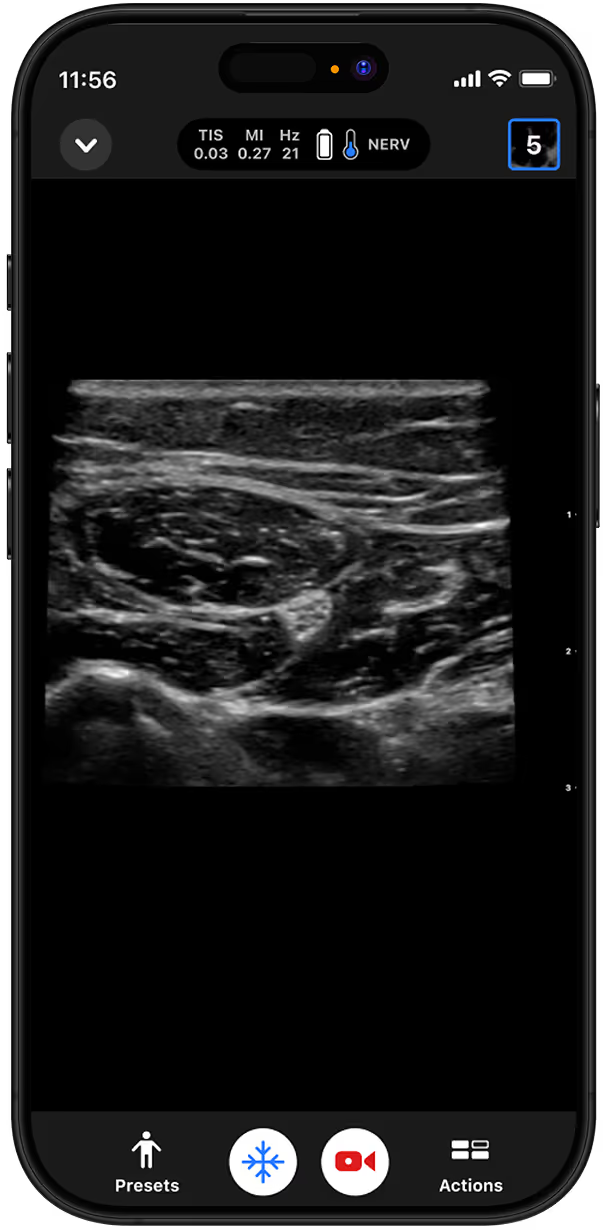

iQ3 delivers exceptional image quality for both superficial and deep regional blocks and can switch dynamically between linear and curved-linear modes. Its chip-based 3D array adds needle-enhancement, including out-of-plane visualization, for precise, confidence-building control.


Cart-level features like Biplane Imaging give clinicians the ability to see the short and long axis of your needle simultaneously in real-time. Studies show that ultrasound guidance can improve success rates and reduce the number of attempts with CVC insertion1.


Even in fasted patients, residual gastric content has been associated with complications of pulmonary aspiration, leading to up to 9% of anesthesia-related deaths2. Butterfly is the only ultrasound device, cart-based or handheld, that provides a numerical gastric volume output.

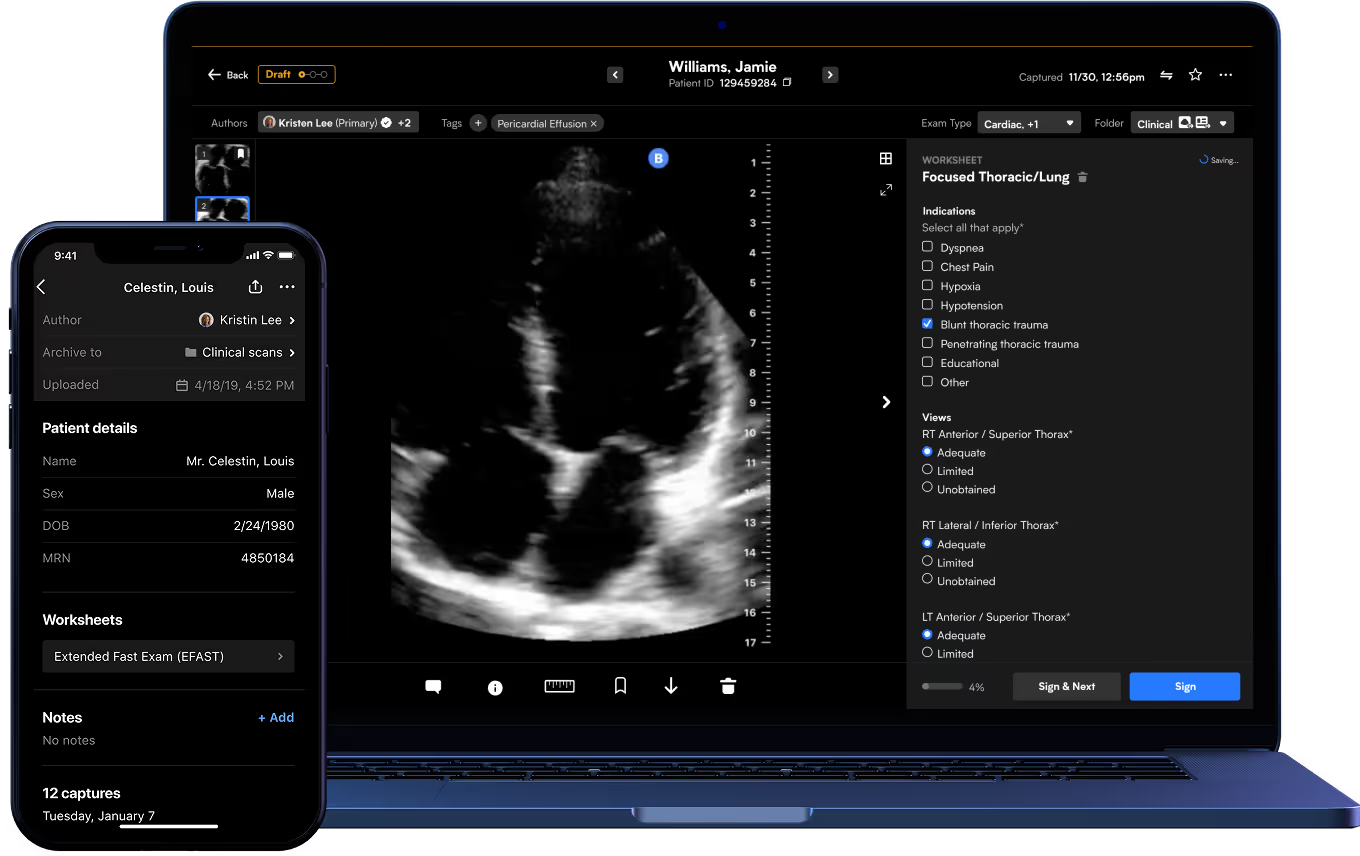
A focused bedside transthoracic echocardiogram performed by anesthesiologists has been shown to accurately detect significant cardiovascular pathology and impact perioperative management3, and Butterfly is the only handheld POCUS device that provides a cardiac output.
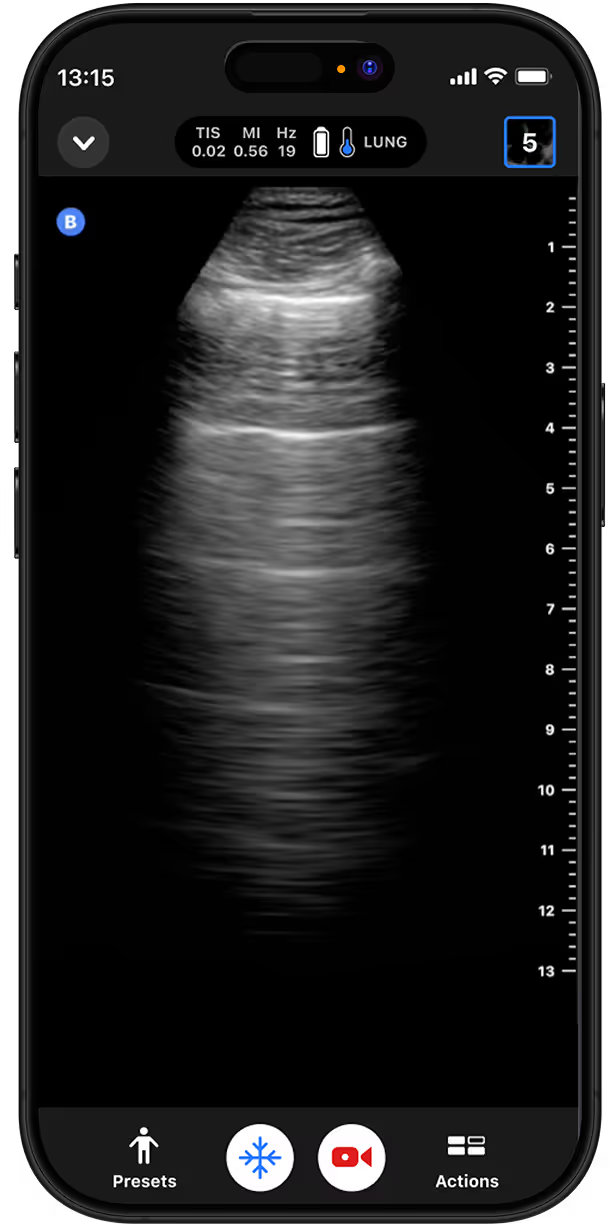

Lung ultrasound (LUS) can help clinicians rapidly evaluate peri-operative hypoxia—flagging pneumothorax, pleural effusion, pulmonary edema, and other causes such as CHF, COPD, or pneumonia—while the AI-powered Auto B-Line Counter quantifies interstitial fluid in seconds for confident, data-driven decisions.
All-in-one imaging, cart-level tools, and an on-the-go workflow for clinicians on the move.
- Improve patient care with tools like 3D array, Biplane Imaging, and Needle: Out of Plane
- Move from linear to curvilinear settings during real-time scanning
- Assess high-risk patients’ cardiac and pulmonary function
- Manage gastric status, particularly for patients on GLP1s
- Remain compliant by sending images downstream to your EMR and PACS
- Train Residents with asynchronous learning tools and track proficiency
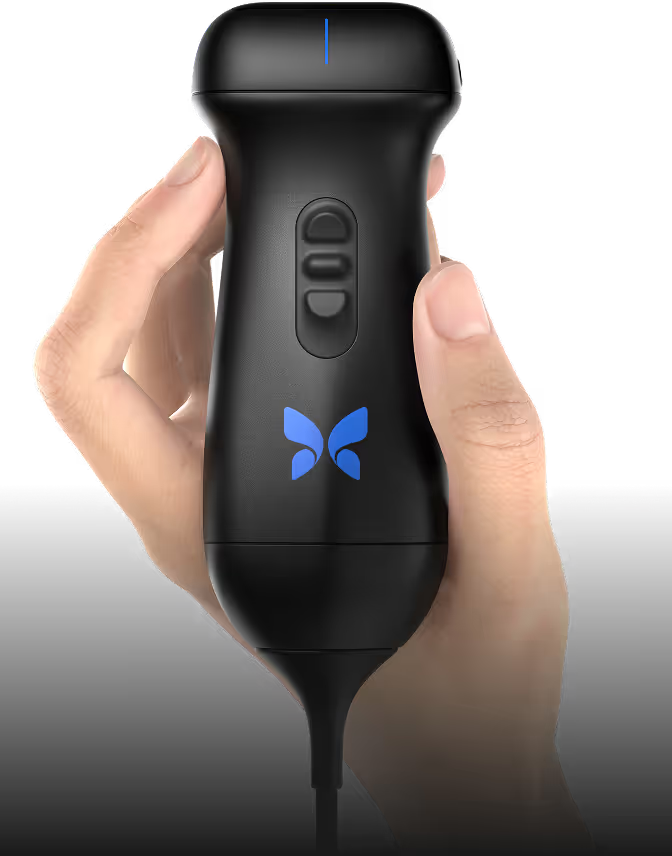



‘Now we can have the best of all the worlds, which is portability, reliability, as well as standard of care not being compromised with your image acquisition’
This isn’t theory. It’s clinical reality.

Radial Artery

Cardiac Biplane PLAX PSAX

IVC long
Step into the new era of medical imaging.
Learn how to adopt cleaner ultrasound with the only handheld ultrasound device that meets RoHS limits.

- https://www.ncbi.nlm.nih.gov/pmc/articles/PMC2766872/
- https://www.ncbi.nlm.nih.gov/pmc/articles/PMC6190418/
- https://pmc.ncbi.nlm.nih.gov/articles/PMC5296812/
Frequently Asked Questions
- How is ultrasound used in anesthesia?

Ultrasound is used in anesthesia for ultrasound-guided regional anesthesia (nerve blocks), vascular access for central and arterial lines, preoperative airway assessment, gastric ultrasound for aspiration risk, and perioperative cardiac evaluation. Butterfly iQ3 allows anesthesiologists to perform all of these applications with a single handheld probe, at the bedside or in the operating room, without a separate ultrasound machine.
- What is ultrasound-guided regional anesthesia?
Ultrasound-guided regional anesthesia uses real-time imaging to visualize nerve targets, surrounding anatomy, and needle position during peripheral nerve blocks. This improves block accuracy, reduces the risk of intravascular injection or nerve injury, and enables lower local anesthetic doses. Butterfly iQ3 is used for nerve block guidance across common procedures including brachial plexus, femoral, sciatic, and adductor canal blocks.
- Why use handheld ultrasound in anesthesia?
Butterfly iQ3 gives anesthesia providers a portable imaging tool that can be used anywhere in the perioperative environment — preoperative holding areas, operating rooms, procedure suites, and recovery areas. It eliminates the need to request or transport a shared ultrasound cart and allows anesthesiologists to integrate imaging into their standard workflow for vascular access, regional anesthesia, and patient assessment.
- Can ultrasound improve procedural safety in anesthesia?
Yes. Ultrasound guidance for vascular access and regional anesthesia has well-established safety benefits, including reduced rates of vascular complications for central line placement and improved first-pass success for peripheral IV access. For nerve blocks, ultrasound guidance reduces the risk of intravascular injection, pneumothorax for selected blocks, and local anesthetic systemic toxicity by enabling precise needle placement.
- What is gastric ultrasound and can Butterfly be used for it?
Gastric ultrasound is a point-of-care technique used to assess gastric content and volume before anesthesia induction — helping identify patients at elevated risk for pulmonary aspiration. Yes, Butterfly iQ3 can be used for gastric ultrasound; the single probe supports the epigastric imaging views required for gastric assessment, making aspiration risk evaluation practical in preoperative settings.
- Can Butterfly ultrasound be used for airway assessment before intubation?
Yes. Ultrasound can be used to assess airway anatomy before intubation, identify difficult airway features, confirm endotracheal tube placement, and evaluate the subglottic area. Butterfly iQ3 is used by anesthesiologists and emergency physicians for airway ultrasound as part of pre-procedural planning and real-time confirmation.