
The clear answer in
point-of-care ultrasound.
Meet the Butterfly iQ3 - our easiest-to-use POCUS device with the sharpest image quality, rapid data processing, Al, advanced imaging tools, user-centric ergonomics, and outstanding scan time.
Superior data transfer rate.
2x faster processing power.
You asked. We answered.
BetterFasterEasierBetter
ultrasound.
Highest quality rapid imaging.
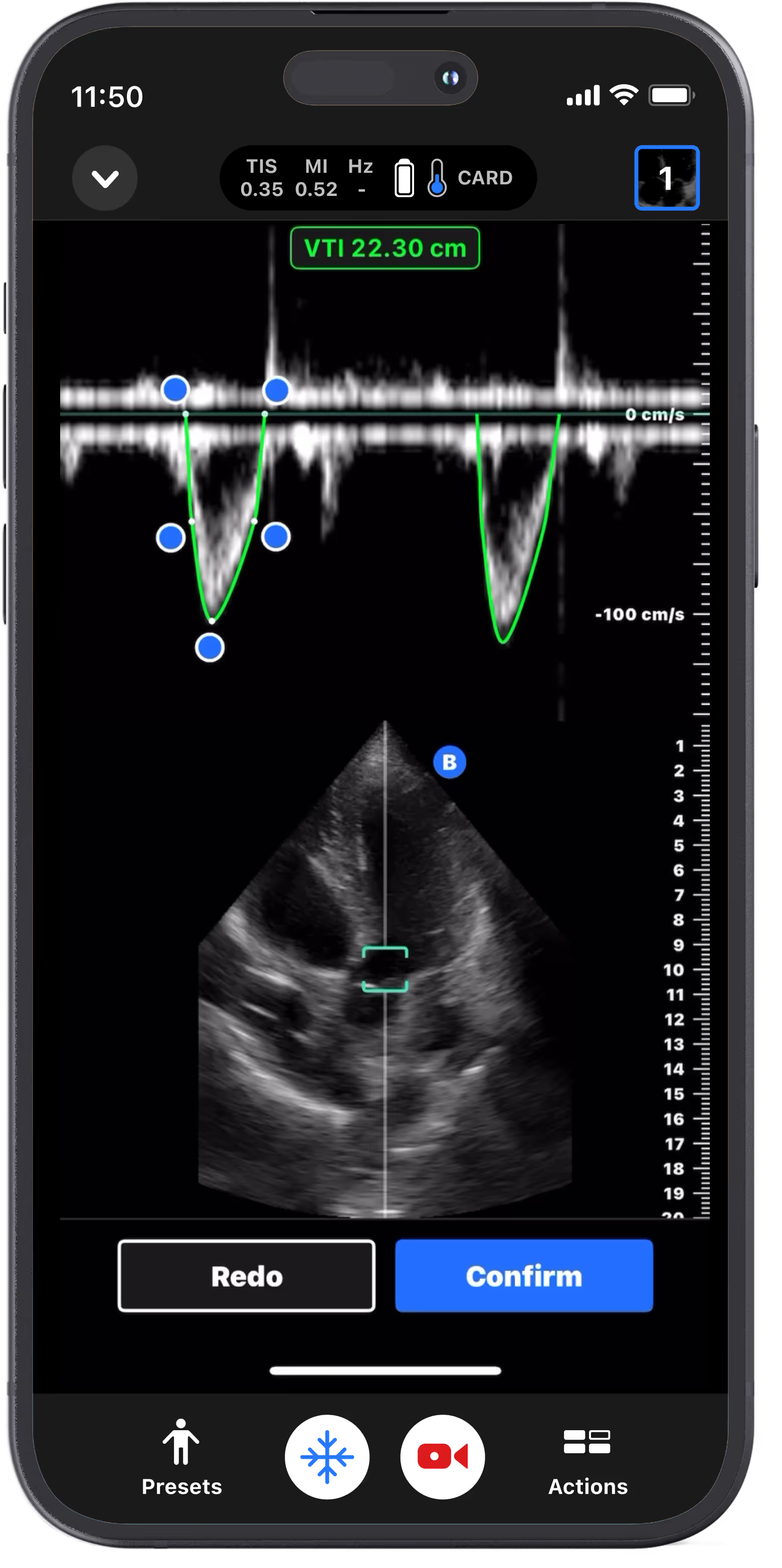
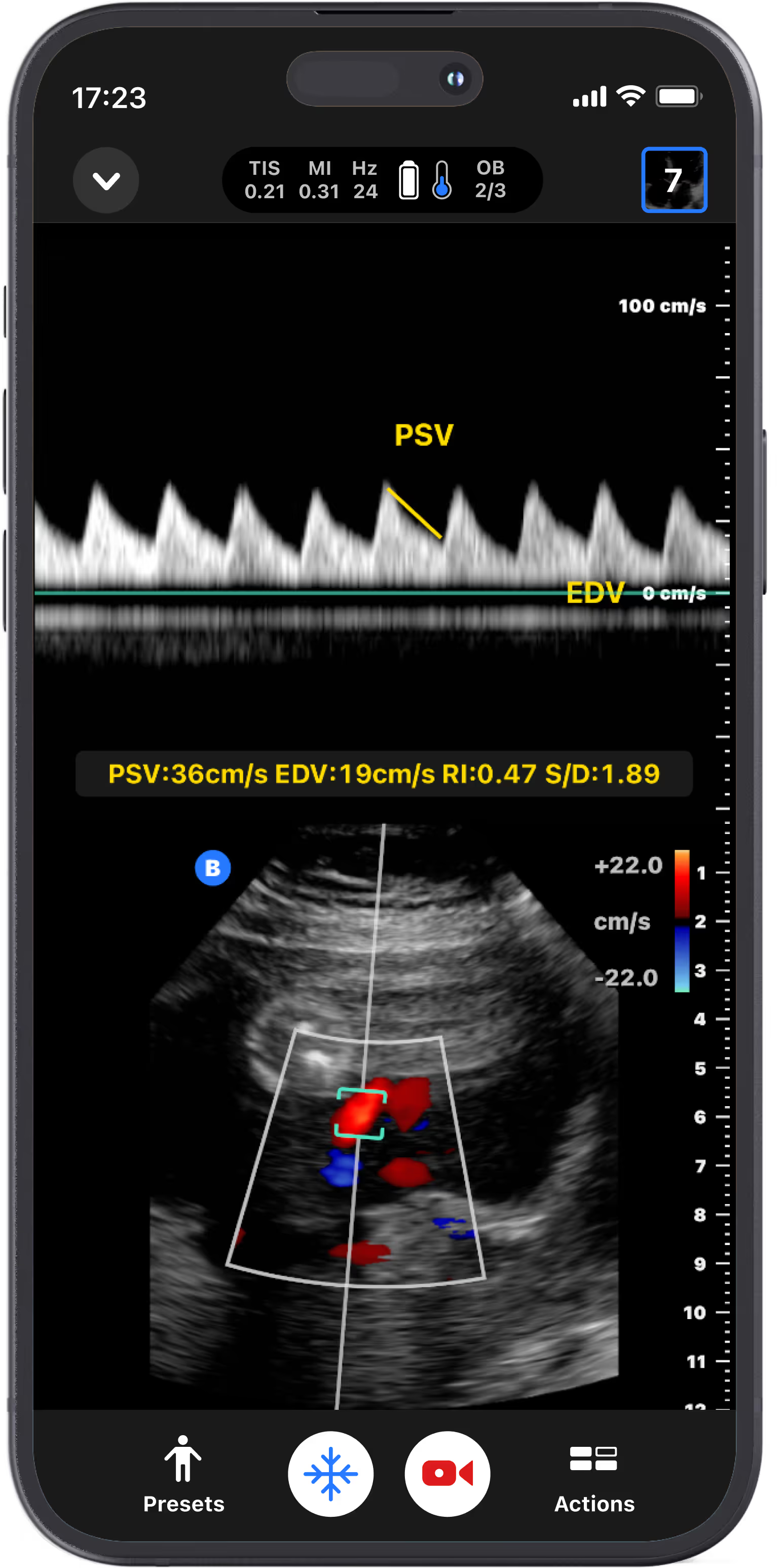


Introducing iQ3 with a comprehensive suite of Vascular Access features.
You can now easily visualize the needle and get the control necessary for PIV and CVC placement.
Image quality ranked higher versus our main competitor across:

Butterfly

Competition

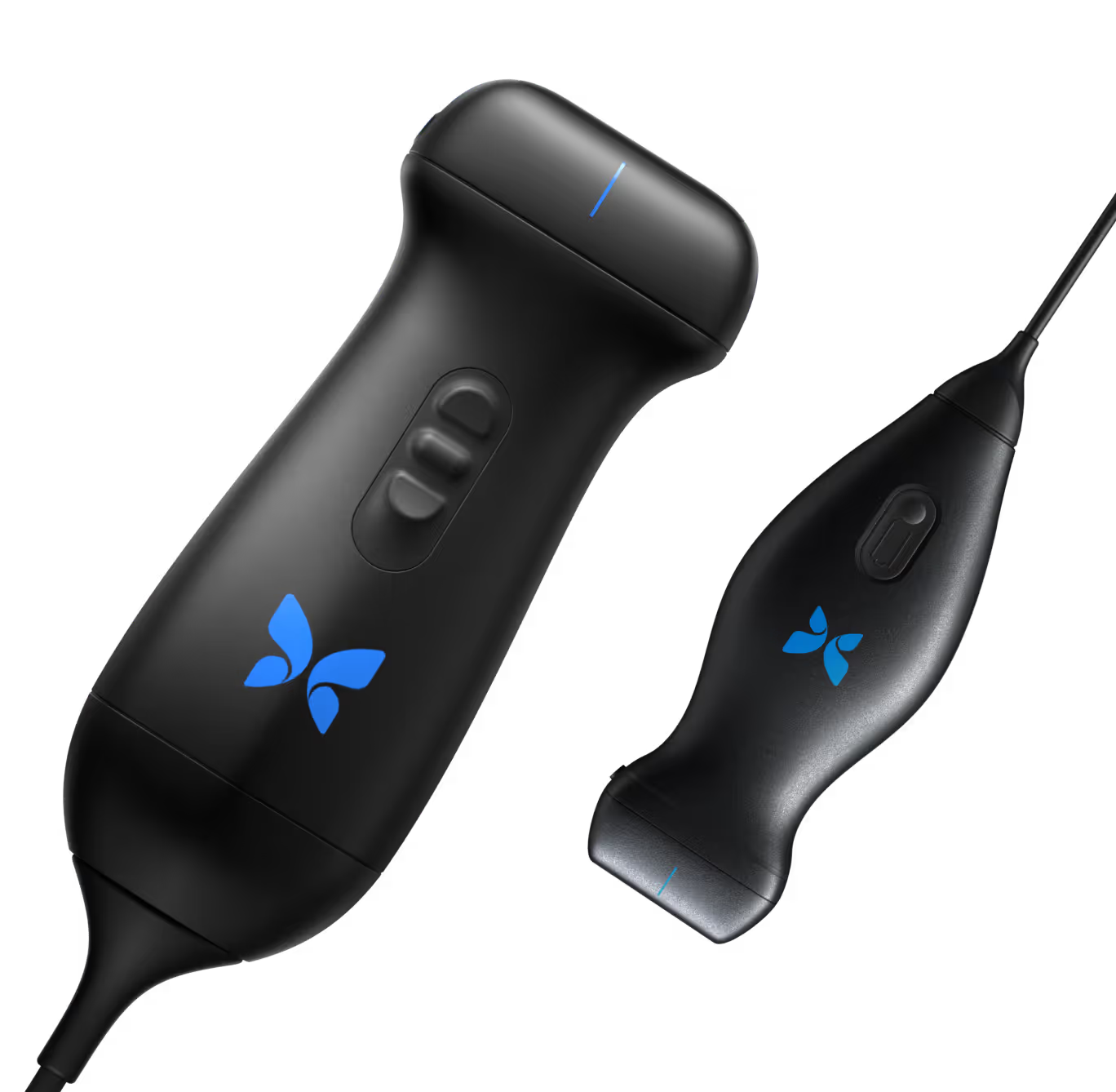


Faster charging. Outstanding scan time.
Longest scan time among
rechargeable handheld devices.1
User-centric ergonomics and configurable buttons.
The user-friendly controls allow for seamless navigation, enabling quick scans and interpretations, thereby saving critical time during diagnoses.


Frequently Asked Questions
- What is Butterfly iQ3?

Butterfly iQ3 is Butterfly Network's most advanced handheld ultrasound device, featuring superior image quality, and more AI-powered tools than previous probe models. It connects to compatible iPhones and Android devices, uses a single probe for whole-body imaging, and supports a wide range of clinical applications from emergency medicine to primary care.
- How is iQ3 different from iQ+?
iQ3 offers several meaningful improvements over iQ+: higher processing power for faster image rendering, better image quality and resolution, improved AI tool performance, longer scanning time per charge, and more advanced software capabilities for anatomy identification and clinical decision support. iQ+ remains a capable and cost-effective option for clinicians who need core POCUS functionality. iQ3 is the better choice for high-volume clinical environments or users who want the most advanced imaging and AI features available.
- Which Butterfly device is right for me — iQ3 or iQ+?
Choose Butterfly iQ3 if you perform high volumes of scans, work in demanding clinical environments like the ICU or emergency department, want the latest AI-powered imaging tools, or need superior image quality for complex diagnostic applications. Choose Butterfly iQ+ if you need a cost-effective entry point into handheld ultrasound for point-of-care use, student training, or lower-acuity settings. Both devices use the same single-probe Ultrasound-on-Chip™ platform and work with the same Butterfly app and membership.
- What are the main clinical benefits of Butterfly iQ3?
Butterfly iQ3 delivers portability, high image clarity, fast clinical workflows, and compatibility with Butterfly's full suite of AI-powered tools. Key benefits include faster time-to-diagnosis at the bedside, elimination of the need for multiple specialty-specific probes, software-driven capability improvements over time, and integration with CompassAI for documentation and billing workflows.
- What clinical applications is iQ3 used for?
Butterfly iQ3 supports a broad range of clinical applications including cardiac imaging, abdominal assessment, lung ultrasound, vascular access and evaluation, musculoskeletal imaging, procedural guidance, obstetrics, and more. The single probe's wide frequency range (1–12 MHz) enables whole-body imaging without requiring specialty-specific transducers.
- Can Butterfly iQ3 replace traditional ultrasound machines?
Butterfly iQ3 can replace traditional ultrasound systems for most point-of-care applications, including bedside assessment, procedural guidance, and focused diagnostic exams across multiple specialties. For highly specialized diagnostic imaging — such as advanced echocardiography or detailed fetal anatomy surveys — high-end dedicated ultrasound systems may still be preferred.
- How does Butterfly iQ3 compare to traditional cart-based ultrasound?
Butterfly iQ3 replaces traditional cart-based systems with a device that fits in a coat pocket and costs a fraction of the price. Traditional carts require multiple probes, dedicated room space, and scheduled availability — limiting access to imaging at the bedside. Butterfly iQ3 gives individual clinicians an always-available imaging tool that supports the same core imaging modes, with AI guidance and cloud-based documentation built in. New features are delivered via software updates, whereas traditional systems require expensive hardware upgrades.
- What are the advantages of semiconductor-based ultrasound over piezoelectric systems?
Semiconductor-based ultrasound, like the Ultrasound-on-Chip™ technology in Butterfly iQ3, enables a single probe to perform multiple imaging types that traditionally require separate piezoelectric transducers. This reduces equipment cost, simplifies probe management, and allows imaging capabilities to improve through software updates. The CMUT-based chip design also enables a wider frequency range from a single device, resulting in better versatility across clinical applications. It also eliminates the need for piezoelectric crystals, which typically contain lead concentrations of 40–65% in traditional systems — making Butterfly iQ3 the only commercially available handheld ultrasound device that is RoHS compliant without exemption.
- Why choose handheld ultrasound over cart-based systems?
Handheld ultrasound is faster, more portable, and significantly less expensive than cart-based systems. Clinicians can bring the device to the patient rather than moving critically ill patients to imaging. A single handheld device like Butterfly iQ3 eliminates the need for probe libraries, reduces scheduling bottlenecks, and enables point-of-care imaging in any setting — from the emergency department to the patient's home. With CompassAI integration, documentation and billing happen in real time, reducing unrecorded scans.
1 As compared to Vscan and Clarius.