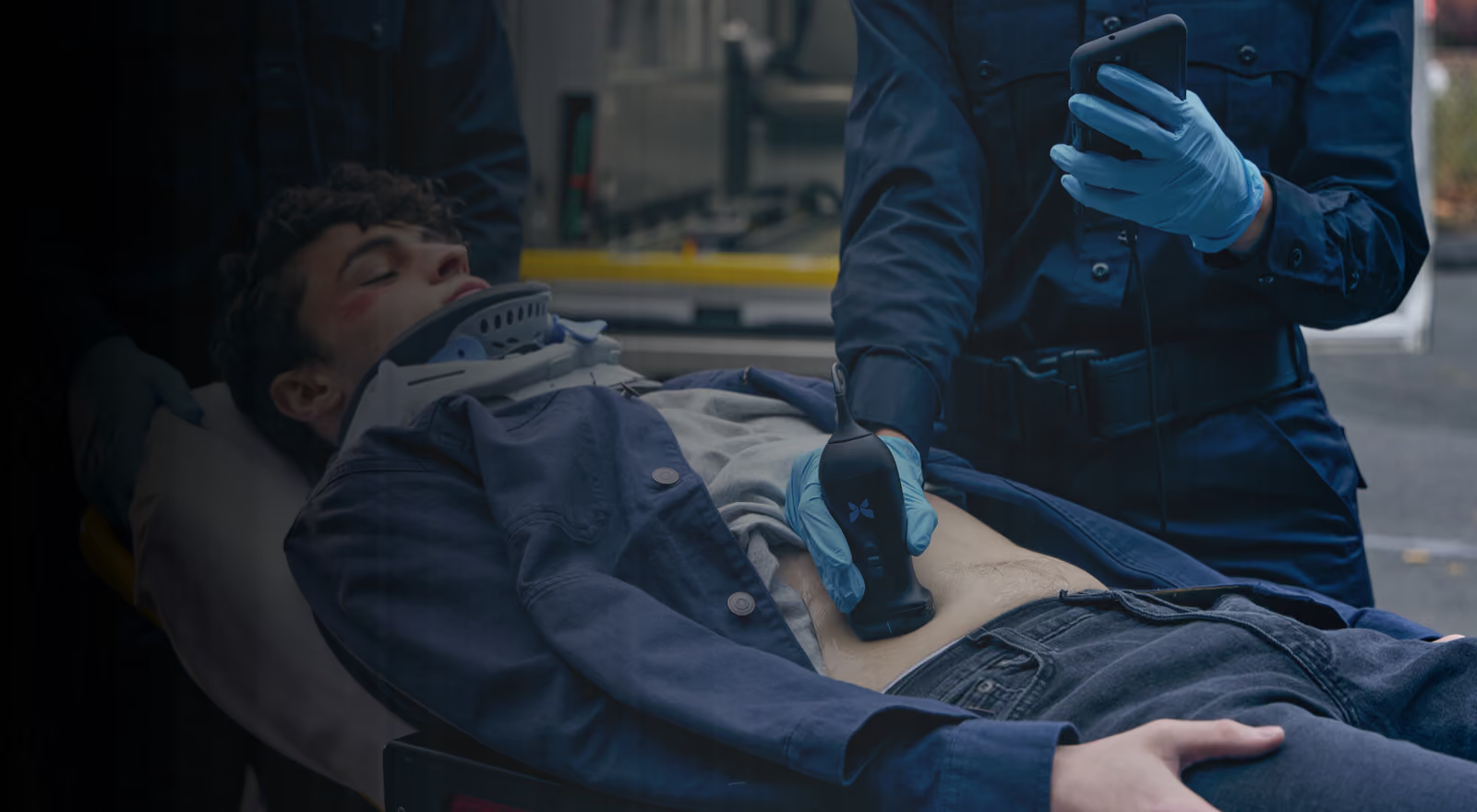


Rule out life-threatening injuries in seconds. With Butterfly's Ultrasound-on-Chip technology, clinicians can complete an eFAST assessment using a single handheld probe, reducing delays when every second matters. Customisable probe controls and one-touch image capture help clinicians stay focused on patient care while securely storing scans to the Butterfly Cloud.
- Rapid abdominal assessment
- Lung evaluation
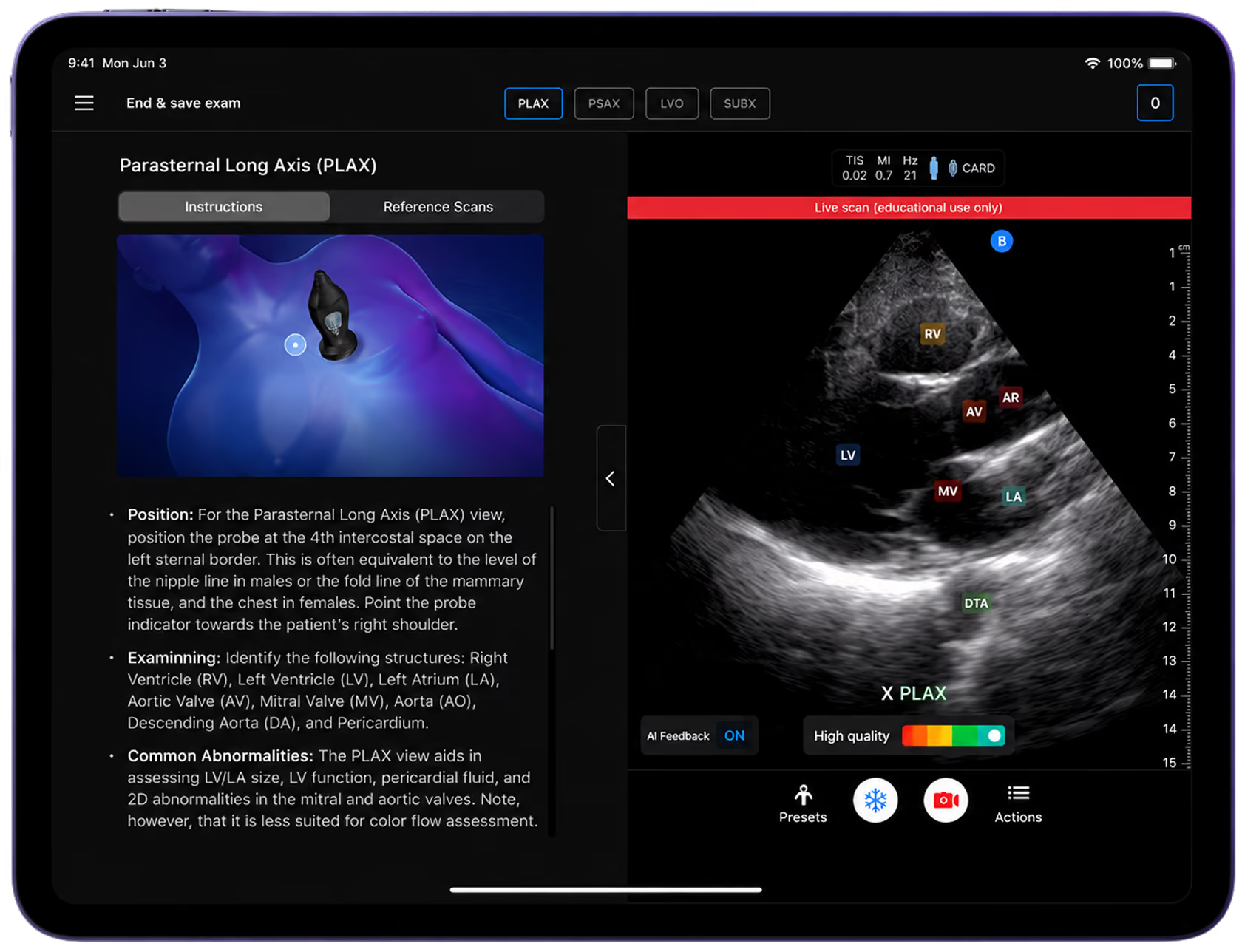
- Cardiac windows
- Streamlined documentation


Unlock the power of lung ultrasound. Automatically detect and quantify B-lines within seconds, supporting rapid evaluation of pulmonary edema and fluid status during prehospital and emergency care assessments.


Improve guidance for challenging PIV access. As many as 1 in 2 acute care patients have difficult PIV access1. With Needle Viz™ technology and the world's first POCUS Biplane Imaging™, Butterfly iQ3 can help support successful insertion.
All-in-one imaging, rugged tools, and a fast workflow for clinicians in the field.
- Rule out life-threatening injuries fast with eFAST, 3D array, and Biplane Imaging
- Assess lung status and quantify B-lines during acute dyspnea
- Guide challenging vascular access with Needle Viz: Out of Plane
- Assess high-risk patients' cardiac and pulmonary function
- Stay compliant by sending images downstream to your ePCR and PACS
- Train crews with asynchronous learning tools and track proficiency




Step into the new era of medical imaging.
Learn how to adopt cleaner ultrasound with the only handheld ultrasound device that meets RoHS limits.

Frequently Asked Questions
How is ultrasound used in EMS?

Prehospital crews use point-of-care ultrasound to assess trauma, breathing difficulty, and circulation at the scene — informing triage and transport decisions before arrival at hospital.
What is prehospital point-of-care ultrasound?
It is ultrasound performed at the patient's side — in the field or in the rig — to answer focused clinical questions quickly, rather than in a hospital imaging suite.
Why use handheld ultrasound in the field?
A single handheld probe is rugged, pocket-sized, and boots in seconds — well suited to the space, time, and mobility constraints of prehospital care.
Can ultrasound improve trauma triage in EMS?
Focused exams such as eFAST can help identify life-threatening findings early, supporting faster and better-informed triage and transport decisions.
What is eFAST and can Butterfly be used for it?
eFAST is a focused exam for free fluid and pneumothorax in trauma. Butterfly's single-probe workflows support abdominal, lung, and cardiac windows for eFAST assessment.
Can Butterfly ultrasound help with difficult IV access?
Needle Viz™ and POCUS Biplane Imaging™ are designed to improve visualisation during peripheral vascular access, helping support successful insertion.